
Why Commercial Properties Need Regular Palm Maintenance
Palm trees are a popular feature around commercial buildings throughout Coffs Harbour. They provide an attractive tropical appearance and require relatively little maintenance compared to many other tree species. However, without periodic cleaning and pruning, mature palms can begin to create a range of maintenance, safety and pest management issues.
At Thrive Arbor, we regularly assist commercial property owners, councils and government facilities with palm maintenance to help protect buildings and keep sites looking their best.
Common Problems Caused by Unmaintained Palms
Pest Access to Buildings
One issue that is often overlooked is the way palms can provide a direct pathway for pests.
Dead fronds, seed stalks and foliage that contact walls or roofs can allow ants and other insects to access buildings more easily. Once pests establish themselves inside a building, they can become difficult and costly to manage.
Maintaining adequate clearance between palms and structures is a simple but effective way to reduce this risk.
Palms Contacting Buildings
As palms mature, fronds naturally grow towards nearby structures.
When fronds repeatedly contact walls, windows, gutters or roofs they can:
Rub against building facades during windy conditions.
Cause cosmetic damage and staining.
Block gutters and downpipes.
Interfere with building inspections and maintenance.
Regular pruning helps maintain safe clearance while preserving the health and appearance of the palms.
Reduced Airflow and Building Staining
Dense palm canopies can significantly reduce airflow around buildings.
Poor air movement allows moisture, dust and organic matter to accumulate on walls, creating ideal conditions for algae, mould and staining. While cleaning the building can remove these marks, addressing the surrounding vegetation often prevents the problem from returning as quickly.
Improving airflow is one of the simplest ways to reduce ongoing building maintenance costs.
A Recent Commercial Project in Coffs Harbour
Recently, our team completed palm maintenance at the Coffs Harbour Police Station, where a row of mature palms had begun creating several maintenance issues around the building.
The project included palm cleaning and selective removals to:
Reduce ant access to the building.
Restore clearance between the palms and the facade.
Improve airflow around the structure.
Reduce rubbing of fronds against the building during windy weather.
Improve the overall presentation and make future maintenance easier.
Using our 18-metre tracked spider lift allowed the work to be completed safely with minimal disruption to the surrounding landscaping and pedestrian access.
Why Regular Palm Maintenance Matters
Routine palm maintenance isn't just about appearance—it helps:
Reduce pest access.
Improve building longevity.
Reduce ongoing cleaning and maintenance costs.
Improve site presentation.
Maintain safe clearances around buildings and walkways.
For commercial properties, schools, government facilities, body corporates, holiday parks and office buildings, proactive maintenance is generally far more cost-effective than waiting until problems develop.
Professional Palm Maintenance in Coffs Harbour
Thrive Arbor provides professional palm cleaning, pruning and removal services throughout Coffs Harbour, Grafton, the Clarence Valley and surrounding areas.
Whether you manage a commercial property, government facility, strata complex or residential home, our experienced team has the equipment and expertise to carry out palm maintenance safely and efficiently.
Need your palms assessed? Contact Thrive Arbor to discuss a maintenance program or arrange an on-site inspection.
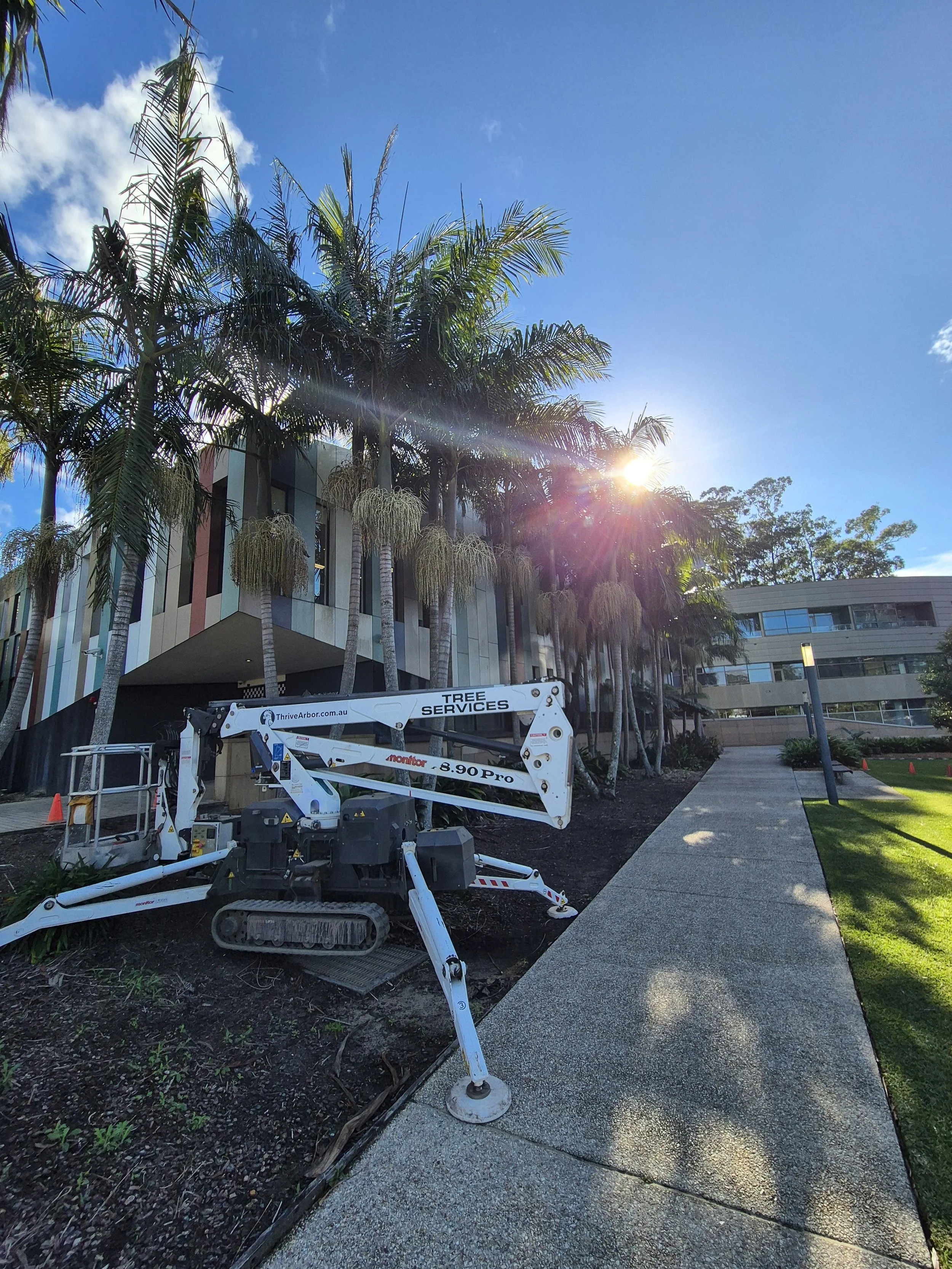
Before
Dense, overcrowded palms block light and create maintenance issues. Our spider EWP used for safe, efficient access.
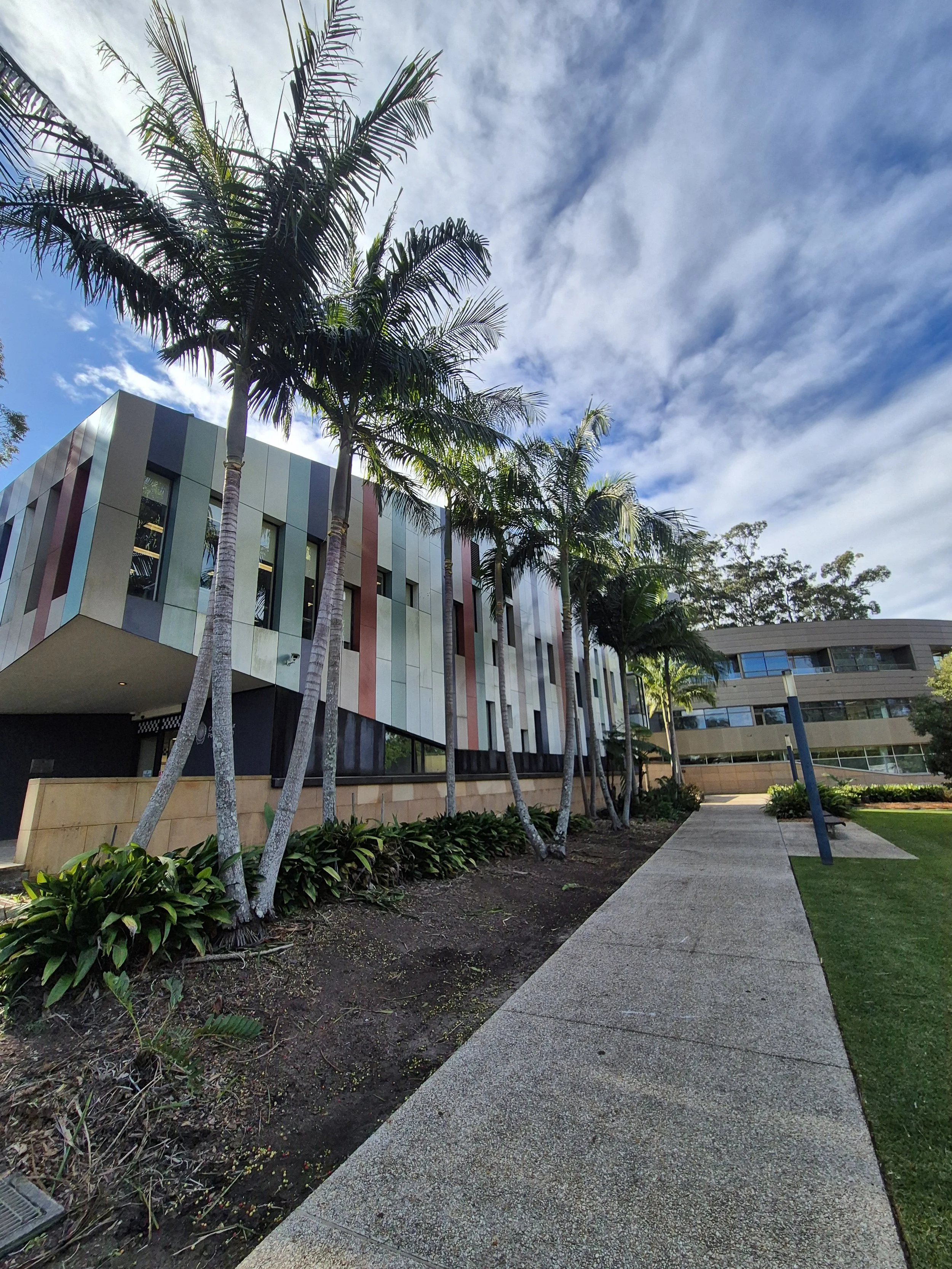
After
Neat palms provide aesthetic appeal whilst maintaining separation from the building facade.